The Art of Interior Decoration
Discover the fundamental principles and elements that transform spaces into beautiful, functional environments that reflect your personal style.
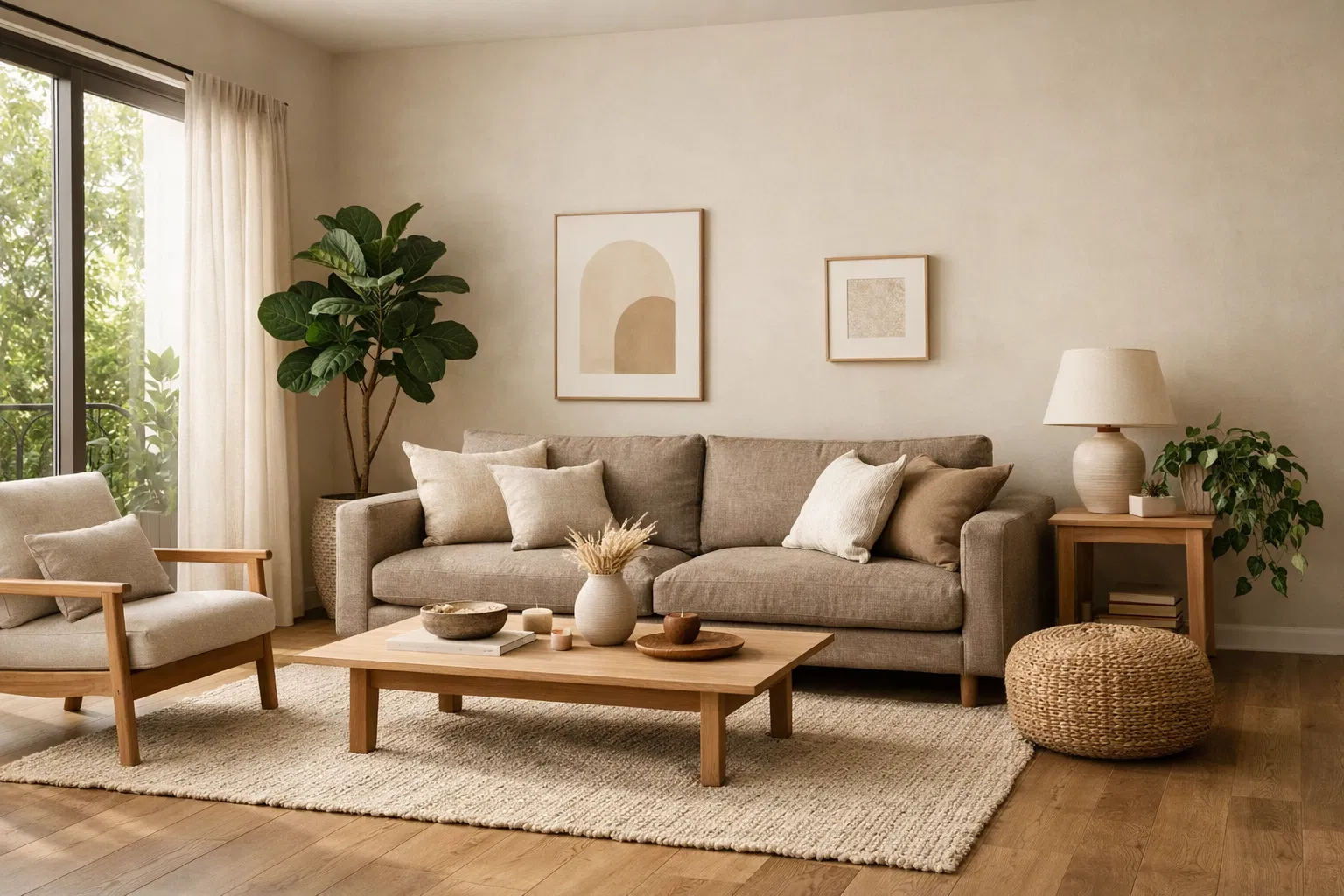
Color Theory Essentials
Color is one of the most powerful tools in interior design. It influences mood, creates atmosphere, and gives character to spaces.
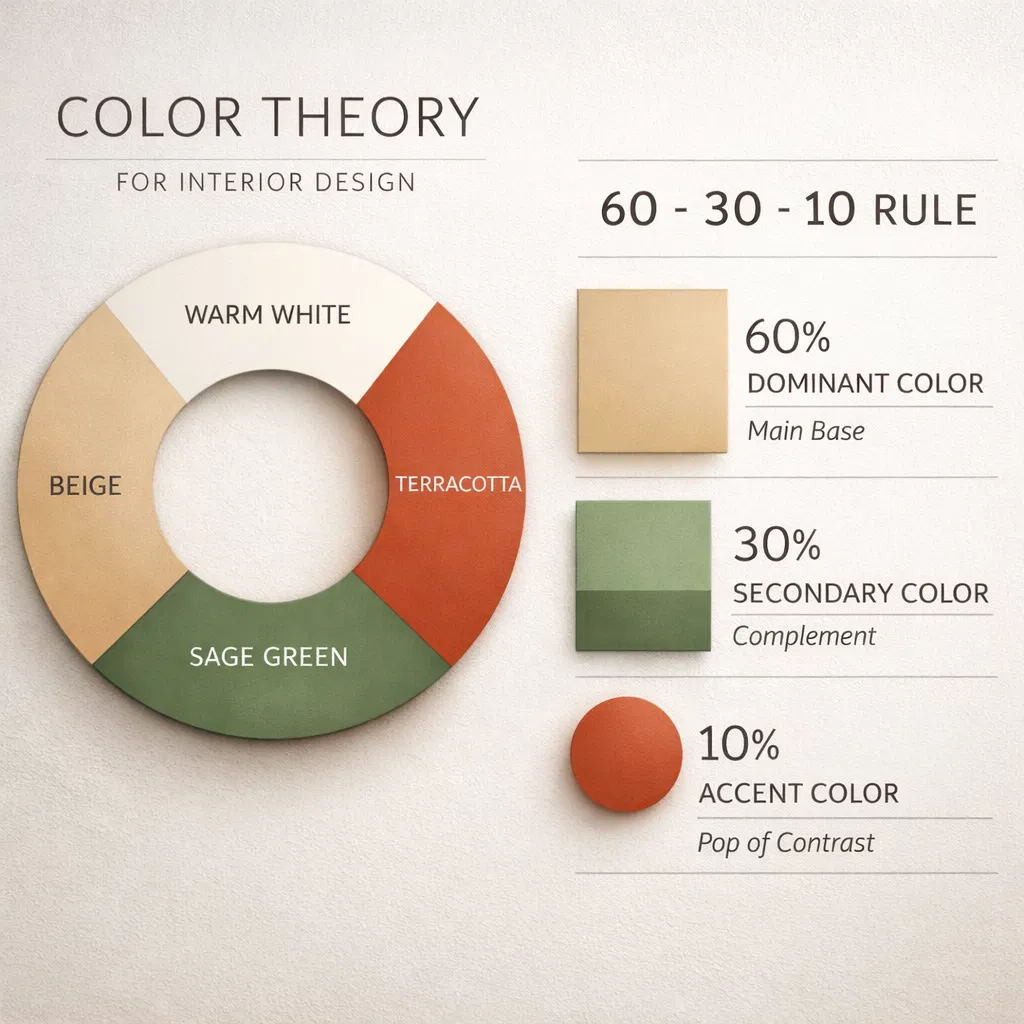
The 60-30-10 Rule
A dominant color should occupy 60% of the space, secondary colors 30%, and accent colors 10% for perfect balance.
Warm vs. Cool Tones
Warm colors (reds, oranges, yellows) create energy and comfort. Cool colors (blues, greens, purples) promote calmness and relaxation.
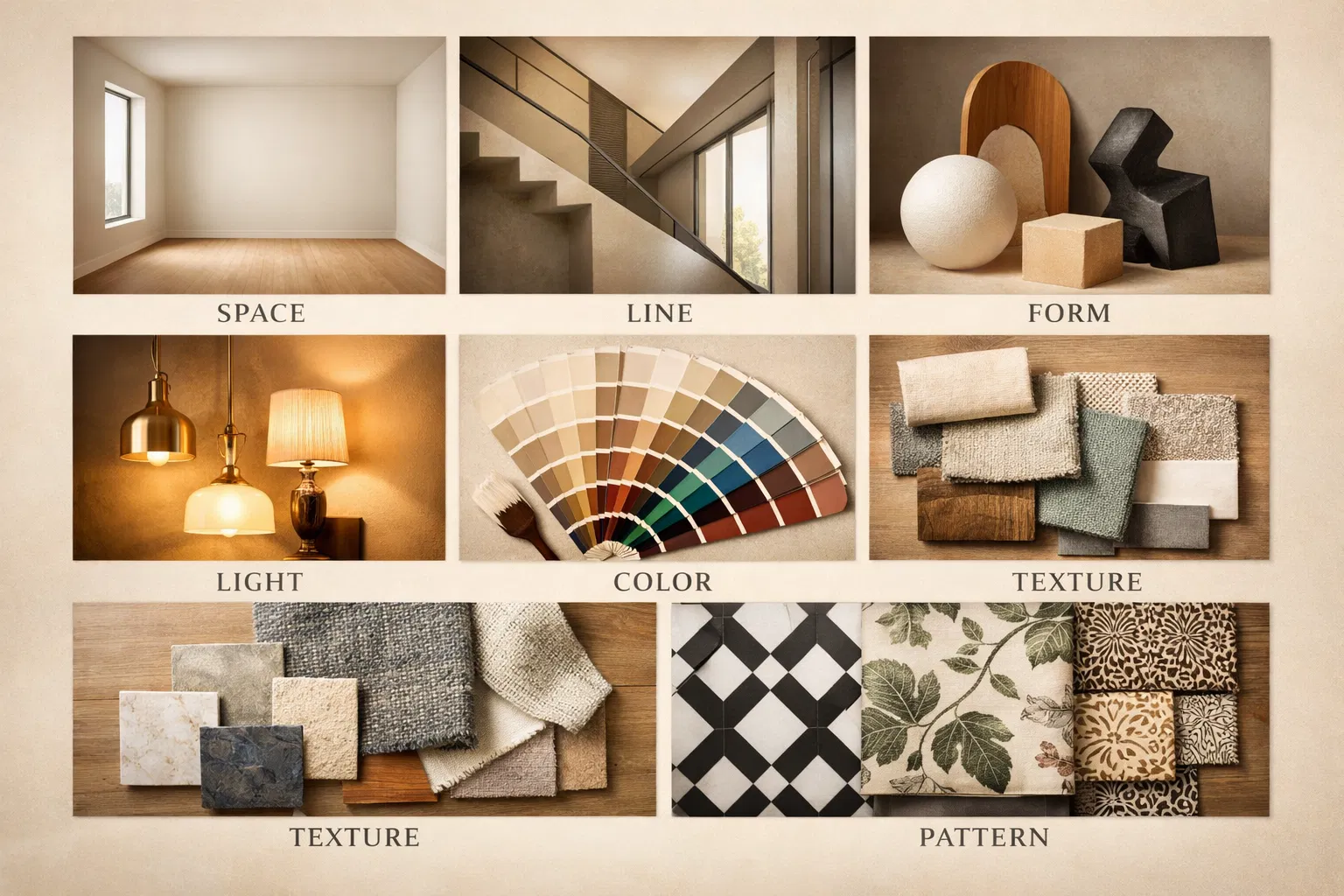
The 7 Core Elements of Interior Design
These fundamental building blocks form the foundation of every successful interior design project.
Space
The foundation of all design. Space planning determines layout and what can be incorporated based on size and shape.
Line
Lines guide the viewer's gaze and create structured flow. Horizontal and vertical lines create security, while diagonal and curved lines introduce interest.
Form
The shape of objects and features within a space. Geometric forms have defined lines, while natural forms have softer, organic shapes.
Light
Crucial element impacting perception of color, texture, patterns, forms, and lines. Three main types: task, accent, and ambient lighting.
Color
Influences mood and overall ambiance. Blue promotes calmness, red stimulates energy. Colors can manipulate space perception.
Texture
Combines visual appeal with tactile interaction, adding depth and dimension. Light-filtering and light-absorbing textures serve different purposes.
The 7 Core Principles of Interior Design
These principles guide how elements should be arranged and combined to create harmonious, functional spaces.
Unity
Cohesion in every element ensures smooth flow in patterns, colors, and textures.
Balance
Provides harmony and visual stability. Three types: symmetrical, asymmetrical, and radial.
Rhythm
Creates visual interest and movement through repetition of colors, patterns, shapes, or textures.
Emphasis
Creates focal points that capture attention immediately upon entering a room.
Contrast
Highlights differences between design elements, creating visual interest and drawing attention.
Proportion & Scale
Proportion refers to relationships between sizes of elements. Scale relates to object size relative to the room.
Details
The finishing touches that complete a design and add personality and refinement.
Furniture Arrangement & Space Planning
Effective furniture arrangement maximizes available space and creates functional, beautiful layouts that support your lifestyle.
Consider Traffic Flow
Arrange furniture to create natural pathways through the room without blocking access to doors or windows.
Define Focal Points
Arrange furniture to highlight key features like fireplaces, windows, or artwork.
Optimize Spacing
Maintain appropriate distances between furniture pieces for comfort and visual balance.

Lighting Design Mastery
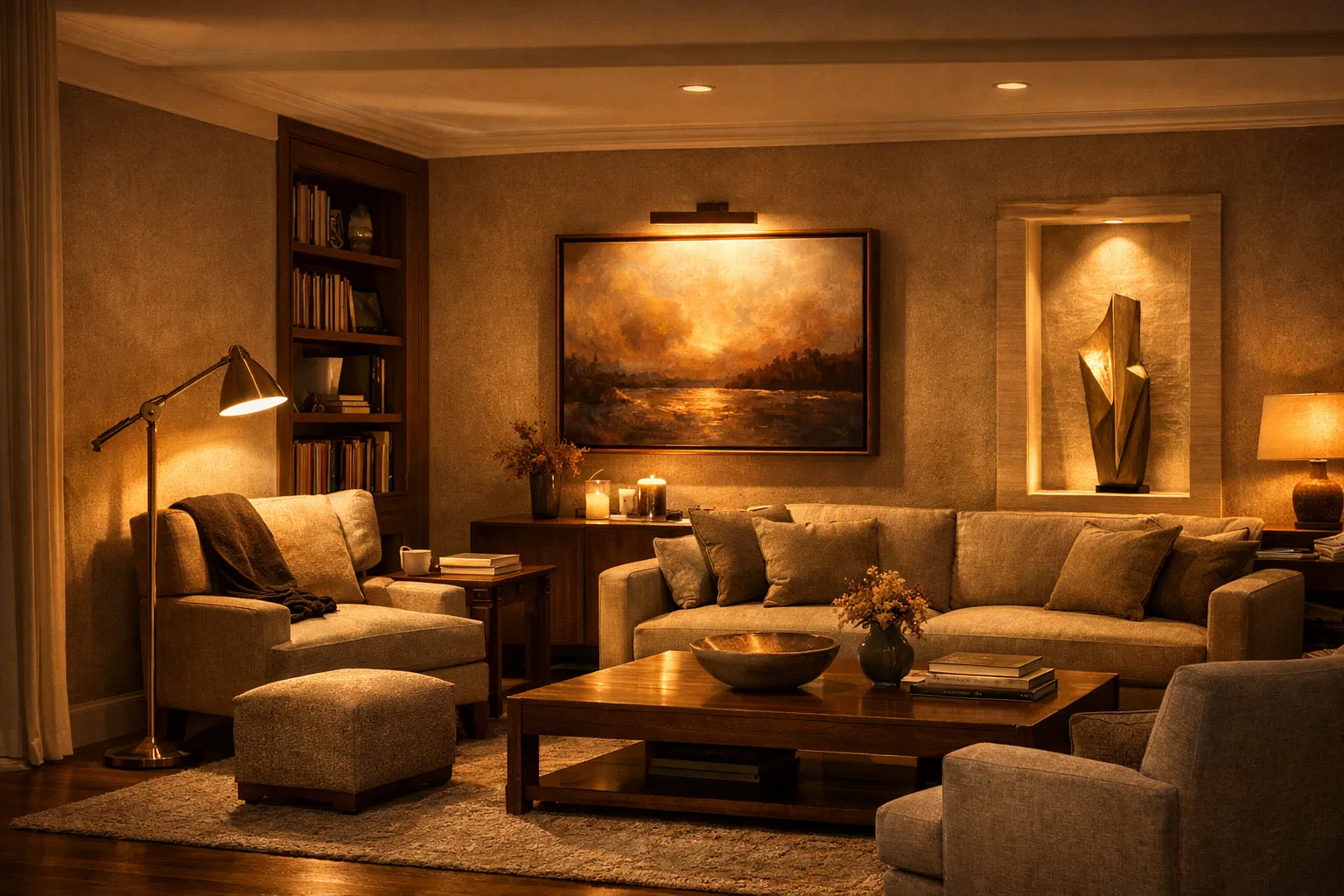
Lighting is crucial in interior design, significantly impacting the perception of all other design elements.
Task Lighting
Focused illumination for specific functions like reading, cooking, or working at a desk.
Accent Lighting
Highlights particular items like artwork, architectural features, or decorative objects.
Ambient Lighting
Sets the overall mood and provides general illumination throughout the space.
Ready to Transform Your Space?
Apply these fundamental principles and elements to create beautiful, functional interiors that reflect your personal style and enhance your daily life.